

How we work
The 5 steps to ship real software
A clear path from discovery to go-live — no black box, with next steps and investment aligned to the business.
Discovery
We map goals, systems, constraints and business priorities.
We understand the problem before proposing a stack. We talk to founders and stakeholders, review current systems, risks and what needs to ship first. Typical output: diagnosis, hypotheses and a realistic delivery path.
- Goals and success metrics
- Systems, integrations and constraints
- Priorities and MVP vs. nice-to-have
Architecture & Design
We define UX, stack and architecture before scaling development.
We design experience and technical foundations together — so debt does not show up mid-build. UX, data model, APIs and stack choices focused on timeline, cost and evolution.
- Essential flows and UX
- Architecture and stack
- Scope, milestones and acceptance criteria
Build
We engineer full-stack with quality, APIs and integrations.
We deliver in short cycles with clear communication and production quality. Reviewed code, tested integrations and visibility on what is done — no end-of-project surprise.
- Short cycles and demos
- Quality, tests and code review
- Integrations and environments
Go-live
We launch with DevOps, security and production monitoring.
Shipping is not “deploy and hope”. We handle deploy, basic security, backups and monitoring so the product lives in real production.
- Deploy and production checklist
- Security and access
- Monitoring and rollback
Evolve & Ops
We improve the product with support, metrics and continuous ops.
After go-live, the product keeps moving. We track metrics, fix the urgent and plan the next wave — with the same team that knows the context.
- Support and fixes
- Metrics and learning
- Evolution roadmap


Day to day
How we work together — week by week
Beyond the 5 steps: transparent backlog, PO/product rituals and continuous feedback. You see what is in flight — no black box.
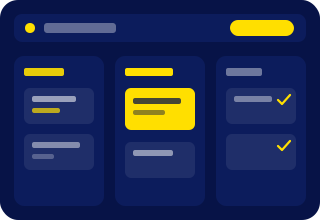
Jira: backlog, sprints and tickets
Priorities on the board, tickets with context and sprints with a clear goal. You track what entered, what shipped and what waits on a decision.
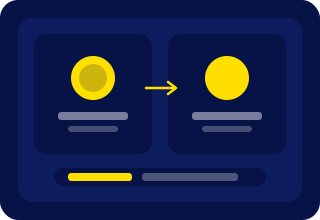
Client ↔ Pixelize (PO) rituals
Alignment calls with product/PO — not empty status. Discovery, planning and review with the people who decide the product on your side.
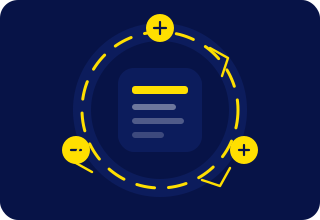
Continuous feedback and demos
End-of-cycle demos, backlog adjustments and async updates on Slack/WhatsApp. Feedback becomes a ticket — it does not vanish in chat.
A typical week
- Discovery / kickoff
We align goal, constraints and what needs to ship first.
- Sprint planning
Pixelize PO + your product side decide what enters the sprint.
- Build + async
Tickets in Jira, updates on Slack/WhatsApp, blockers handled early.
- Demo / review
We show what shipped, capture feedback and reorder the backlog.
Commercial transparency: you know what is running, what is waiting and what changes timeline or investment.
Want to follow this process?
Tell us the challenge — we scope timeline and investment with no surprises.
Common questions
Questions about our process
It depends on scope. Lean MVPs can ship in weeks; larger platforms follow clear milestones. In discovery we align a realistic timeline — no generic promises.
Yes. We work solo or alongside your team — with clear roles, rituals and code ownership agreed from day one.
After discovery (or a quick diagnostic), we lock scope, investment and milestones. We prefer transparency over black boxes.
We offer ongoing evolution and ops: support, improvements, monitoring and new features — with project context intact.
Yes. From founders shipping an MVP to companies with legacy systems — the process adapts; delivery discipline does not.


Shall we start with discovery?
A short conversation to understand the challenge and next steps.